
The Four Wheels Of Rato Machhindranath: Guardians In Motion
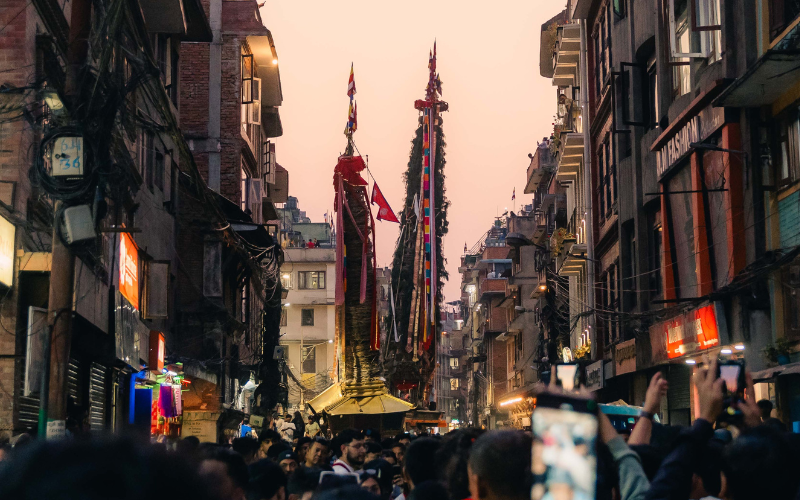
The Rato Machhindranath Jatra in Patan, Nepal, is a centuries-old chariot festival dedicated to the rain deity Rato Machhindranath. Its four massive wheels are believed in Newar tradition to embody protective Bhairav-linked forces, symbolising spiritual guardianship as the deity moves through the Valley.
In the ancient city of Patan, for one month each year, a rumbling colossus moves through narrow streets and crowded squares. The chariot of Rato Machhindranath, the revered deity of rain, harvest, and compassion is not simply pulled. It is carried by collective devotion, patience, and ritual precision.
At its base are four massive wooden wheels. To most travellers, they appear as part of an extraordinary engineering feat. But within local belief systems of the Kathmandu Valley, these wheels are far more than structural components; they are seen as spiritually charged protectors, each associated with guardian forces watching over the city.
The Four Wheels As Guardian Forces
In Newar oral tradition, each wheel is associated with a protective presence often linked to Bhairav: fierce manifestations of Shiva believed to guard space, direction, and energy.
In local interpretation, each wheel of the chariot carries a guardian association linked to Bhairav. The front right wheel is identified with Kundi Bhairav, believed to protect the northern direction, while the front left is associated with Harisiddhi Bhairav, the guardian of the eastern side. The rear right wheel is linked to Lubhu Bhairav, regarded as the warden of the southern territory, and the rear left is connected to Tika Bhairav, seen as the sentinel of the western realm.
Together, they are believed by many locals to form a symbolic protective circle, ensuring safe passage for the chariot as it journeys from Pulchowk to Jawalakhel.
While these associations vary across households and storytellers, they reflect a deeper cultural idea: that movement of the deity through the city is never mechanical but is spiritually governed.
Living Belief: Wheels That Hold Presence
During the festival of Rato Machhindranath Jatra, some priests and devotees believe the wheels are ritually awakened before procession. Through invocation rituals, protective energies are invited to reside within the structure.
Within this worldview, the chariot does not move alone. It is guided, restrained, and protected.
This is why moments of difficulty when a wheel sticks, turns sharply, or resists movement are often met with silence and ritual attention. For many participants, such moments are interpreted not as failure, but as a sign requiring respect, adjustment, or renewed ritual focus.
Craft, Continuity And The Making Of Wheels
The wheels are traditionally rebuilt and repaired as needed, often using time-honoured Newar woodworking techniques. The craftsmanship is highly specialised, passed through generations of artisan families in the valley.
Dense hardwoods are shaped using mortise-and-tenon joinery without modern nails in many structural points preserving an architectural language that predates modern engineering systems.
This process is not fixed to a strict universal cycle but is guided by ritual calendars, structural necessity, and community consensus, making each reconstruction a living cultural event rather than a scheduled engineering task.
Sacred Details On The Ground
For travellers observing closely during the procession, subtle ritual signs can often be seen:
Red sindoor markings near wheel joints as offerings
Small iron elements believed to stabilise spiritual and physical balance
Oil lamps and incense used during early morning rituals
Devotees touching or bowing before the wheel hubs before assisting movement
These gestures reflect a worldview where engineering and devotion are not separate, they are intertwined expressions of respect.
A Living City In Motion
To witness the chariot of Rato Machhindranath is to see a city move in rhythm with faith. The journey is not only about pulling a structure through ancient streets, it is about maintaining balance between human effort, ritual tradition, and collective belief.
The wheels, in this sense, are more than wood and labour. In the eyes of many locals, they are protective presences that travel with the god, not beneath him.
So when you stand in Patan’s squares during the festival, hearing the creak of timber and the chant of crowds, look down at the massive wheels.
They are not just carrying a deity.
They are moving with one.
Soaltee Westend Premier Nepalgunj Hosts First Tharu Food Festival Celebrating Indigenous Cuisine And Culture
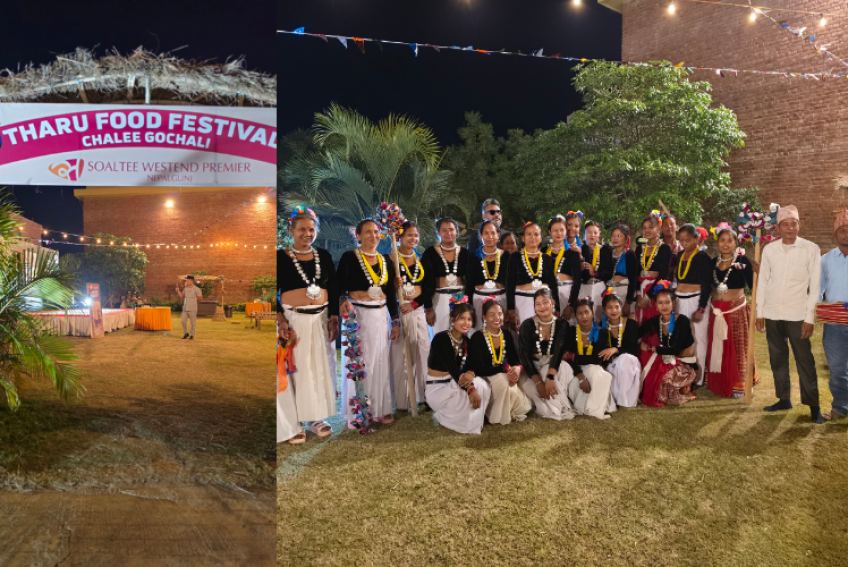
Soaltee Westend Premier Nepalgunj hosted its first Tharu Food Festival (April 30-May 2, 2026), showcasing authentic Tharu cuisine, cultural performances, and traditional heritage to promote tourism in Nepalgunj and the western Terai.
Soaltee Westend Premier Nepalgunj successfully concluded its first-ever Tharu Food Festival, held from April 30 to May 2, 2026, at the hotel’s Rose Garden. The three-day cultural and culinary event welcomed guests from across the region, offering an immersive showcase of the rich traditions and authentic flavours of the Tharu community.
Organised as a first-of-its-kind initiative among star-category hotels in Nepalgunj, the festival aimed to promote indigenous Tharu cuisine while strengthening cultural tourism in the western Terai region. With free entry for all, it attracted a diverse audience including local residents, families, and in-house guests.
The festival featured a wide selection of traditional Tharu dishes, including ghonghi, dhikri, gangata fry, and other locally inspired delicacies prepared using authentic techniques and indigenous ingredients. A live kitchen setup allowed visitors to observe the preparation process closely, adding an engaging, interactive dimension to the experience.
Beyond cuisine, the festival created a vibrant cultural atmosphere with daily live Tharu dance performances, traditional music, and curated cultural displays showcasing bamboo crafts, farming tools, and traditional household items.
Designed as a holistic cultural immersion rather than just a dining event, the festival combined décor, performances, and interactive elements to create an engaging three-day experience. It also served as a platform to highlight and preserve the culinary heritage of the Tharu community, bringing greater visibility to indigenous culture in Nepalgunj.
Speaking on the success of the event, the management of Soaltee Westend Premier Nepalgunj expressed appreciation for the overwhelming response and community support. The festival is expected to pave the way for future thematic events that celebrate Nepal’s diverse cultural heritage.
About Soaltee Westend Premier Nepalgunj
Soaltee Westend Premier Nepalgunj is a leading hospitality destination in western Nepal, committed to delivering exceptional service, innovative experiences, and meaningful engagement with local culture.
mes, but their motives and goals differ.
Annual Picnic 2026 – Malla Travel & Trek Services
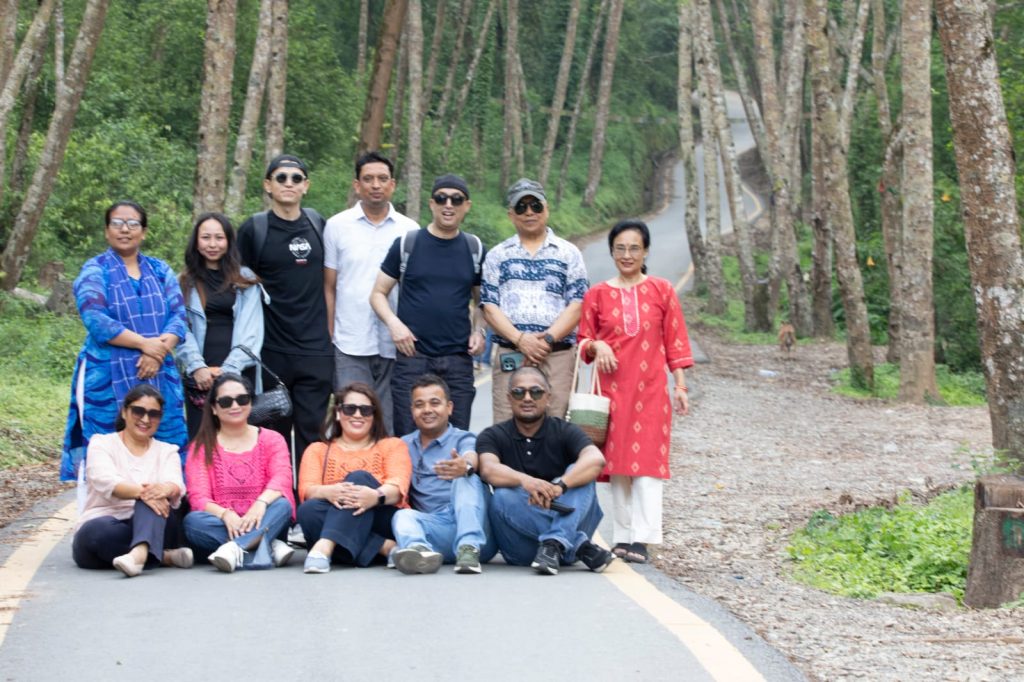
The annual picnic of Malla Travel & Trek Services was held at Best Western Plus Resort at Godavari on 16 May 2026. It was a wonderful opportunity for all our staff members to relax, enjoy themselves, and strengthen team bonds in a cheerful atmosphere of camaraderie.
A variety of fun games and competitions were organized throughout the day, adding excitement and enthusiasm to the event. The winners were awarded prizes in recognition of their participation and achievements.
The picnic was a great success and reflected the strong team spirit that makes our organization special.
Keep up the great spirit and teamwork!