
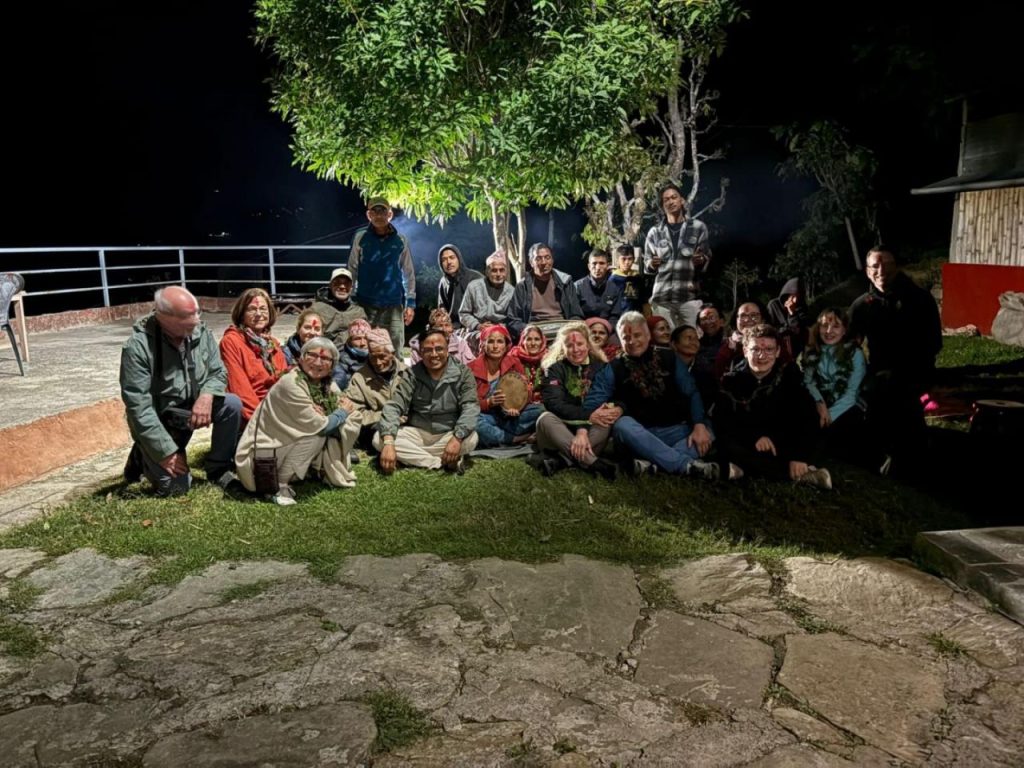
Our Tourist group enjoying a BBQ.
Our tourist group enjoying a BBQ dinner with local hospitality at a farmhouse in Thulakot near Pokhara. “Experiential” tourism is gaining momentum across the landscape! We have started to offer immersive programs that bring tourists in close proximity to local communities to understand them and to experience their every day life and customs.
Asha for Children Foundation
The Situation in Nepal
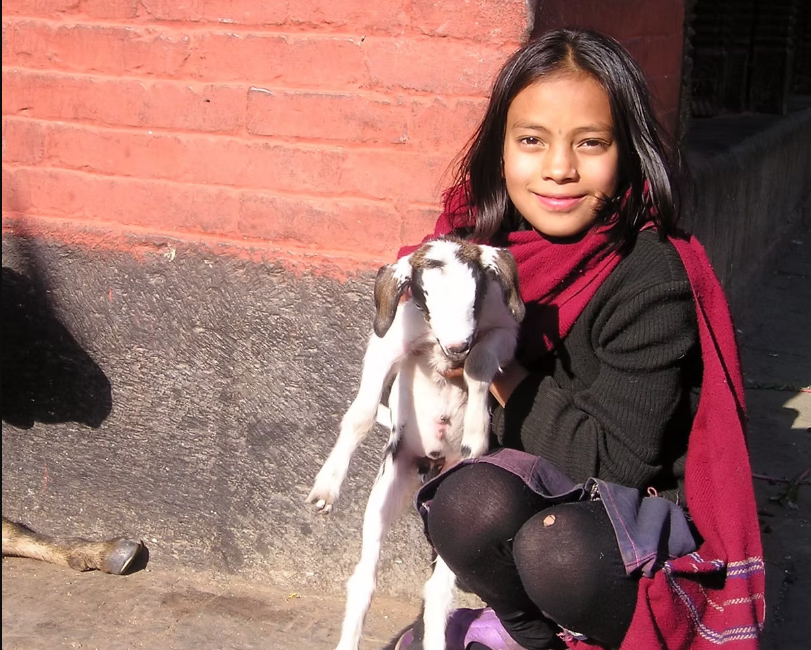
40% of Nepal’s 28 million inhabitants live in abject poverty. They have less than €1 a day to live on – children are the worst affected.
Millions live on the streets and in slums. Only 35% of women and 63% of men can read and write. While school attendance is compulsory, there is a lack of schools, teachers, and money for books and teaching materials. Medical care and hygiene in the mountain regions are completely inadequate. Every day, children die from preventable diseases.
Asha for Children Foundation – The Project
The Asha for Children Foundation in Kathmandu is an NGO (non-governmental organization) that helps underprivileged children, especially girls in the slums of Basundhara, with free early childhood education, healthcare, nutrition, and clothing. The children learn English at an early age, which gives them self-confidence. Since the parents of these children usually work for starvation wages in brickyards or live by collecting plastic bottles, their lives are hopeless..
Margit and Heribert Wirth and their friends financed the construction of a school and hostels in Tathali, near Bhaktapur, 28 km east of Kathmandu, through the Nepal Himalaya Park Foundation in Wiesent, Germany.
A school with a boarding facility for poor and needy children.
Asha is a widely used word in Hindi and Nepali that means hope. Therefore, there are many projects and several organizations that include this word in their names, but their motives and goals differ.
Freak Street/Hippies story
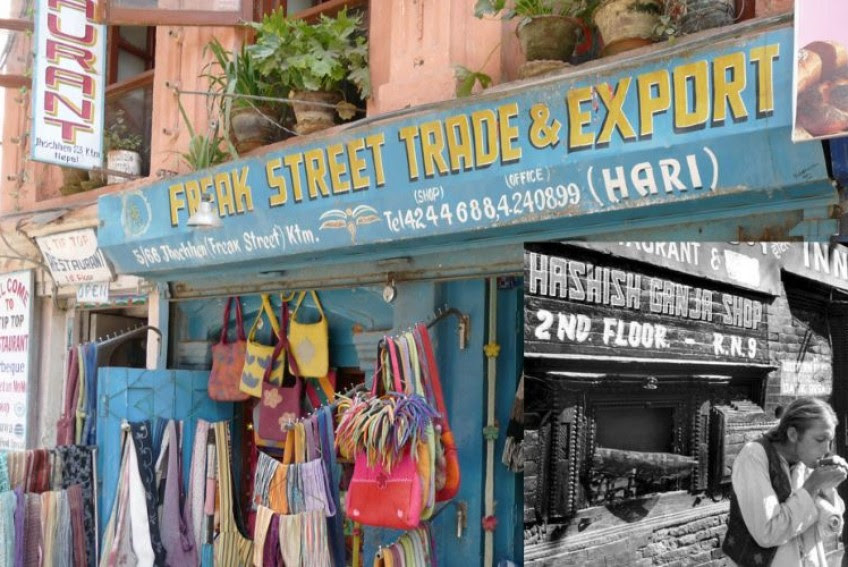
When Freak Street Was The Heart Of Hippie Kathmandu
Once the epicentre of the global hippie trail, Freak Street in Kathmandu was where counterculture met civilisation—shaping a fleeting yet fascinating chapter in Nepal’s tourism history.
A Street Between Worlds
Just south of Kathmandu Durbar Square lies Freak Street: a narrow lane that, for a remarkable period between the early 1960s and mid-1970s, became one of the most unlikely cultural crossroads in the world.
Known locally as Jhochhen Tole, this modest street emerged as the Kathmandu hub of the hippie trail, drawing travellers from Europe and beyond in search of freedom, spirituality, and an alternative way of life.
The Rise of a Counterculture Haven
In the 1960s, Nepal stood apart as one of the few countries where cannabis was legally sold under government licence. This, combined with its relative affordability and spiritual allure, made Kathmandu a magnet for a generation disillusioned by Western consumerism and geopolitical unrest.
Freak Street quickly evolved into a cosmopolitan enclave of wanderers. Budget guesthouses, informal cafes, and open courtyards became spaces where ideas flowed freely that were fuelled by music, philosophy, and a shared desire to explore beyond conventional boundaries.
More than indulgence, the movement carried a deeper current. Many travellers sought Eastern philosophies, meditation, and spiritual insight, blending bohemian lifestyles with ancient traditions.
Life on Freak Street
At its peak, Freak Street offered a vivid tableau of countercultural life:
Guesthouses and Cafes: Simple lodgings catered to long-stay travellers, while cafes became hubs of conversation, music, and ideological exchange
Legal Cannabis Culture: Government-regulated shops openly sold marijuana and hashish, contributing significantly to the street’s global reputation
Music and Artistic Expression: Western folk and rock blended with Eastern instruments, creating a spontaneous, cross-cultural soundscape
Local Interaction: Nepali artisans and traders adapted to the influx, producing handicrafts and textiles that reflected a fusion of local and psychedelic aesthetics
It was, for a brief time, a living experiment in cultural convergence.
The Decline of the Hippie Era
By the early 1970s, the atmosphere began to shift. Under mounting international pressure, particularly from the United States, Nepal moved to criminalise cannabis and revoke sales licences.
Simultaneously, the government introduced stricter visa controls and tourism regulations, gradually discouraging the long-stay counterculture community that had defined the area.
By the late 1970s, the hippie trail had largely dissolved. In its place, Nepal repositioned itself as a destination for trekking, mountaineering, and cultural tourism, marking the beginning of a new chapter in its global identity.
Legacy in the Present Day
Today, Freak Street is quieter but not forgotten. Its lanes still echo with history, lined with shops, eateries, and traces of its unconventional past.
For modern travellers, it offers something more nuanced than nostalgia. It stands as a symbol of Kathmandu’s openness and adaptability, a reminder of a time when the city played host to a global cultural movement.
Freak Street is more than a historical footnote. It represents a moment when Kathmandu became a meeting point of East and West, tradition and rebellion, spirituality and self-expression.
In an era of curated travel experiences, its story remains refreshingly raw: a testament to the unpredictable ways in which places can shape, and be shaped by, the world.